
Our Sustainable Packaging Approach
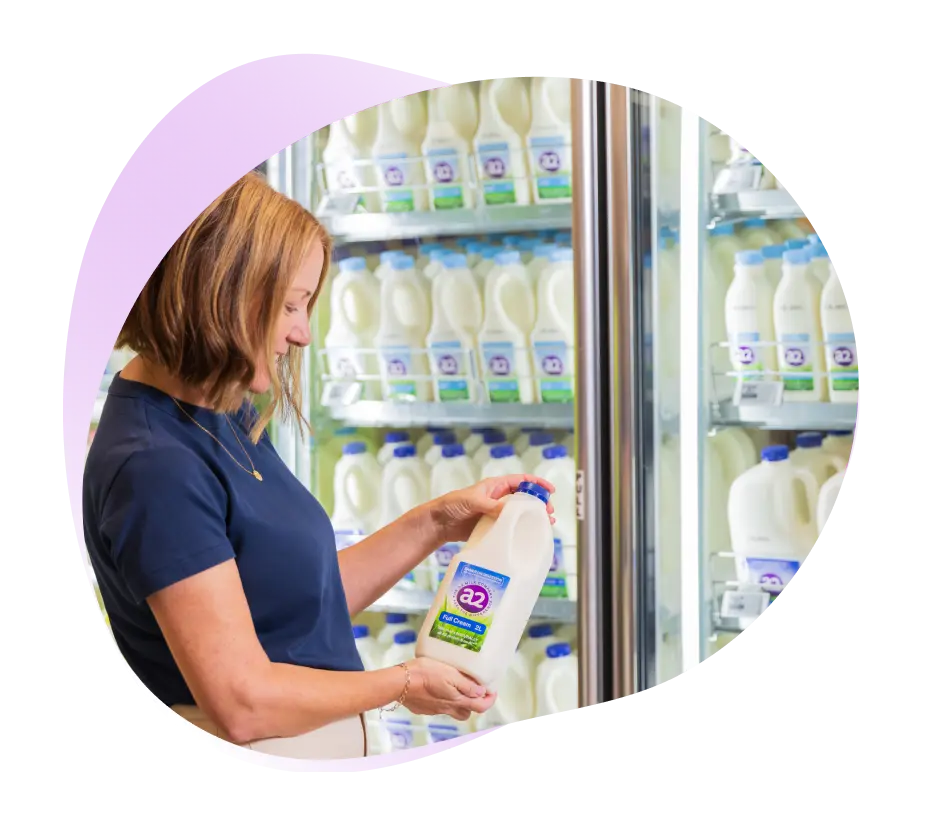
Packaging plays a critical role in delivering our products safely, fresh and ready to enjoy. We are improving packaging sustainability to limit environmental impacts and increase packaging recovery and recycling, while safeguarding product integrity.
Sustainable Packaging in Practice
Well-designed packaging is essential to deliver dairy nutrition. It preserves product quality, protects consumer health and safety, maintains shelf life, enables secure transport, supports accessibility, and meets regulatory requirements across different markets.
While delivering products safely remains our top priority, we are also focused on reducing the environmental impact of how those products reach our consumers.
Our approach to sustainable packaging balances these considerations through practical, measurable improvements across the full packaging system from material choices to end-of-life outcomes, to labelling that supports correct disposal.
Our product packaging portfolio
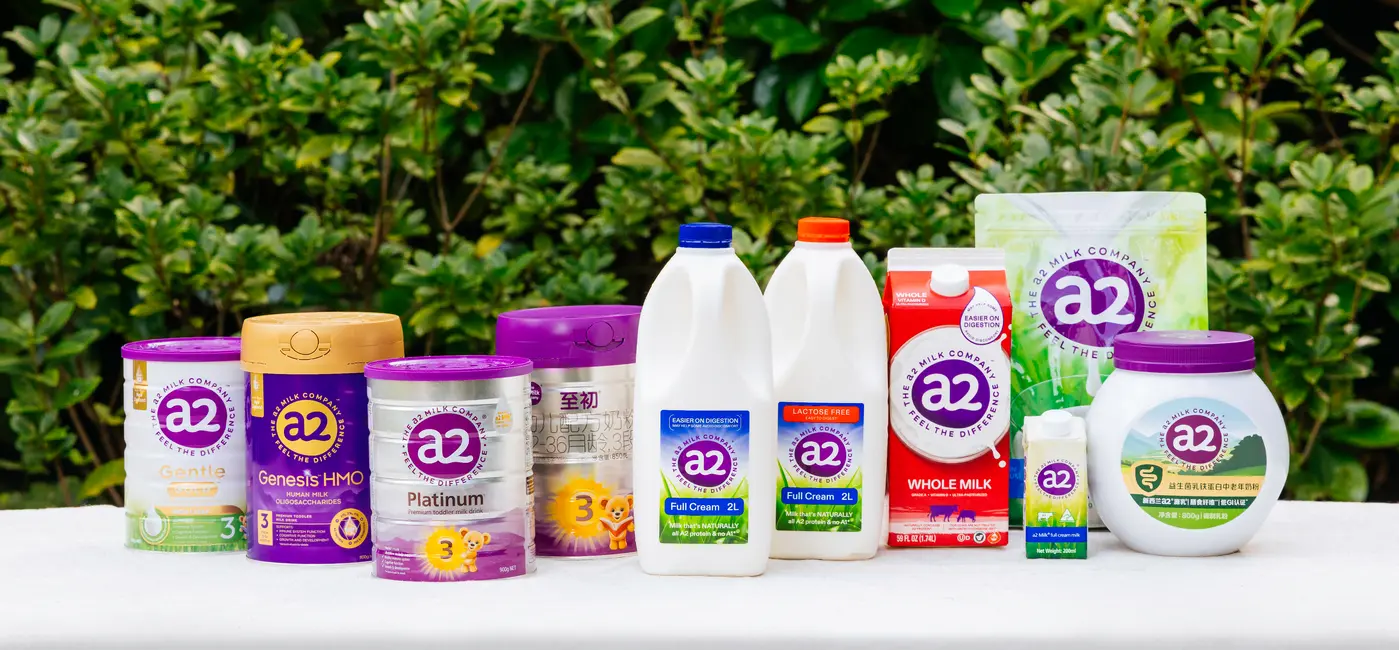
Selecting the right packaging for our products is complex. Each product has unique requirements for safety, consumer use, freshness, and shelf life, which means we use a mix of materials across our portfolio.
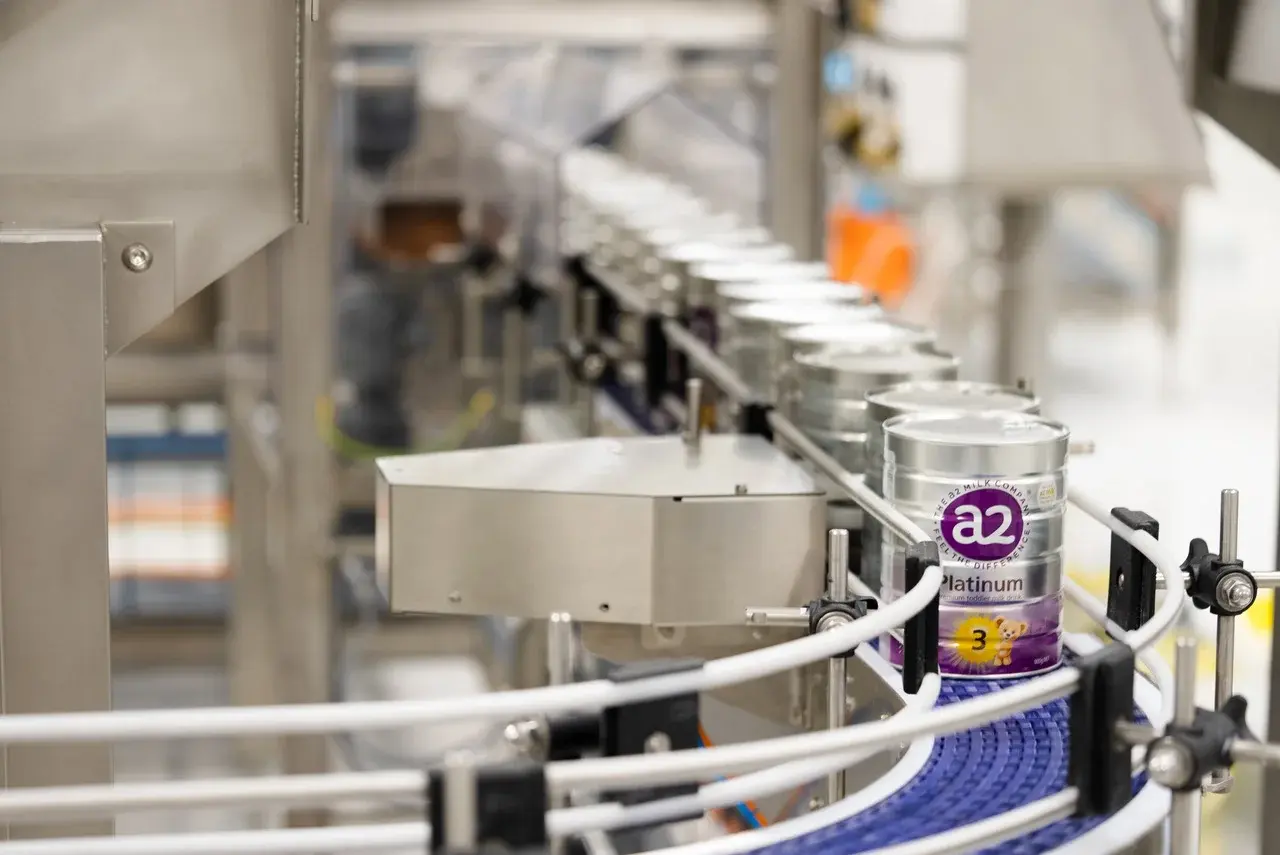
Today, our primary packaging includes steel cans, high density polyethylene (HDPE) plastic milk bottles, liquid paperboard milk cartons, and cardboard shipping boxes.
The a2 Milk Company works collaboratively across its value chain to improve how packaging is designed, used, recovered and disposed of. We are focused on increasing recycled content and designing packaging that supports a circular economy for all the materials used in our packaging portfolio.
Steel cans are the most significant primary packaging material used by The a2 Milk Company, including for all infant milk formula products. Steel cans provide excellent product safety and shelf-life, and they are also highly recyclable as a valuable material in our consumer markets.
Where plastic (HDPE) bottles and liquid paperboard cartons are used, we seek to support recycling programmes and effective consumer labelling to drive recovery through these programmes and recycling systems.
From Design to Disposal: Targets Across the Packaging Lifecycle
Our approach to sustainable packaging addresses three priorities:
- Reducing material use to optimise packaging whilst maintaining product integrity
- Designing packaging for recovery and recycling
- Increasing the use of recycled material in packaging to drive the circular economy
Targets and commitments:
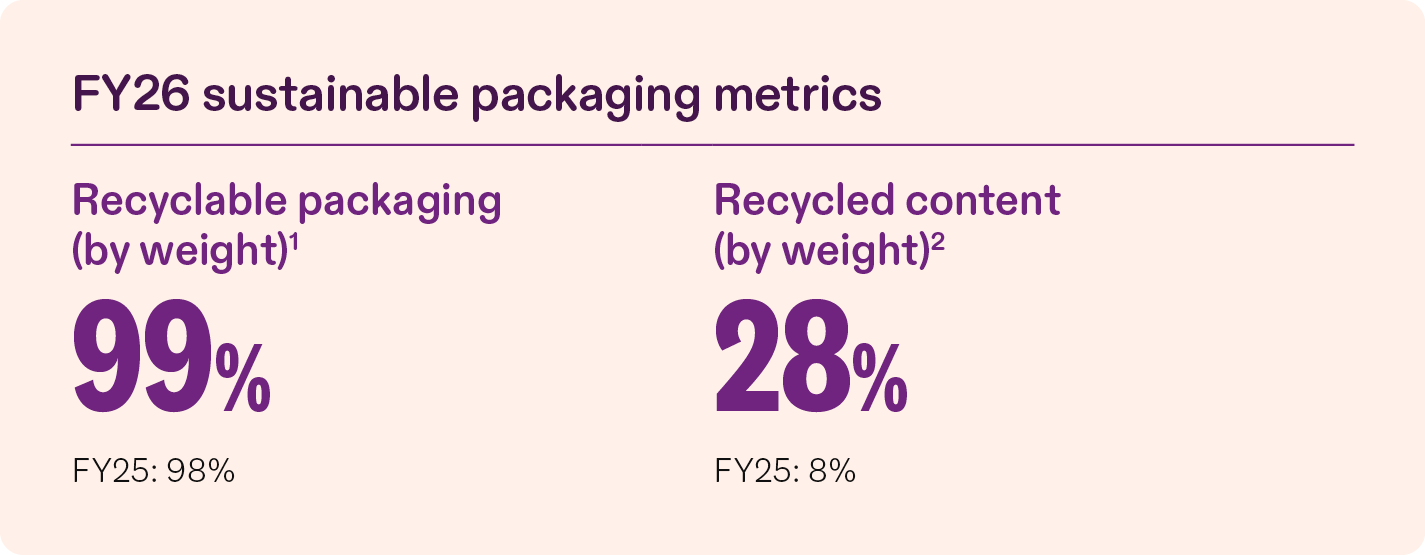
The Company aims to increase its packaging sustainability as measured by:
- Recyclability; and
- Recycled content
Packaging metrics are calculated based on the volume (by weight) of packaging placed on the market, determined by the number of sales units per year.
Progress and Performance Against Targets
Clear, measurable targets allow us to track performance over time and understand where our efforts make the most impact. Details and latest data can be found in the ESG reporting library.
Increasing Recycled Content
We work with our packaging suppliers to increase the use of recycled materials where it is safe, practical and suitable for food-contact packaging. This helps reduce reliance on virgin materials and supports the transition to a more circular economy.
One example of progress is the use of 20% recycled HDPE in our 2-litre, 3-litre and 3.5-litre fresh milk bottles produced at our Smeaton Grange facility in New South Wales, delivering the same food safety and performance with less virgin plastic.
While steel cans contain recycled content, validating recycled content levels remains an industry-wide challenge and is an area we continue to work on with suppliers.
Target
STATUS
Increase recycled content across our packaging portfolio
On Track
As at 30 June 2026
Improving Recyclability
We design packaging with its end-of-life in mind, aiming to ensure packaging can be collected, sorted and recycled through established systems where our products are sold. Market-specific assessments across Australia, New Zealand, China and the United States help us understand local recycling infrastructure and identify opportunities to improve packaging design.
The vast majority of consumers can recycle our packaging through existing local recycling systems. We continue to improve packaging design, remove problematic materials where possible and provide clear disposal guidance to support better recovery outcomes.
Target
STATUS
Increase the recyclability of our packaging portfolio
On Track
As at 30 June 2026
Industry Collaboration
Improving packaging sustainability is a shared responsibility across industry and government.
The a2 Milk Company is a member of the Australian Packaging Covenant Organisation (APCO), a product steward responsible for leading the transition to a circular packaging economy.
APCO has recognised The a2 Milk Company as ‘Leading’, reflecting our progress and leadership in sustainable packaging and circularity.
We are also members of the New Zealand Packaging Forum and contribute to Extended Producer Responsibility (EPR) schemes in Oregon and Colorado to support producer-led responsibility for packaging recovery and recycling in the United States and continuously monitor other applicable schemes for the markets in which our products are sold.
The ESG reporting library contains all voluntary and mandatory climate and ESG disclosures, performance updates and detailed sustainability data.
Explore Our Sustainability Focus Areas

Climate and Nature
Working to reduce emissions, support biodiversity and contribute to nature positive outcomes.
Thriving Farms
Partnering with farmers to strengthen sustainable practices and cow welfare on-farm, to build a resilient supply chain.
Responsible Supply Chain
Sourcing ingredients and materials responsibly, with a focus on human rights and ethical practices.
Enriching Communities
Supporting children, families and our farming communities to thrive.
