
Our Climate and Nature Approach
Climate and nature are interconnected systems that make dairy possible. By working with farmers, partners and industry - and by setting ambitious targets and tracking progress - we’re focused on reducing Greenhouse gas (GHG) emissions and contributing to healthy ecosystems, with the goal of building a more resilient dairy industry for the long-term.
Climate change poses a real challenge to the dairy sector and global food security - but it’s also an opportunity to lead. It’s changing the way we think about resources and production, and we’re responding with practical action.
By reducing greenhouse gas emissions and adapting to a changing climate, The a2 Milk Company is building a stronger, more resilient value chain so we can continue delivering A1 protein free milk for generations to come.
Where our Emissions Come From
Understanding our emissions profile helps us see both the scale of the challenge and the progress we are making.
Our footprint includes:
- Scope 1 – Direct emissions from our operations.
- Scope 2 – Indirect emissions from electricity use.
- Scope 3 - Emissions generated within our value chain.
Scope 3 accounts for over 98% of our total emissions, most of which come from on-farm activities, with the greatest contribution coming from enteric methane from cows. Therefore, on-farm emissions are our biggest focus area for action and support.
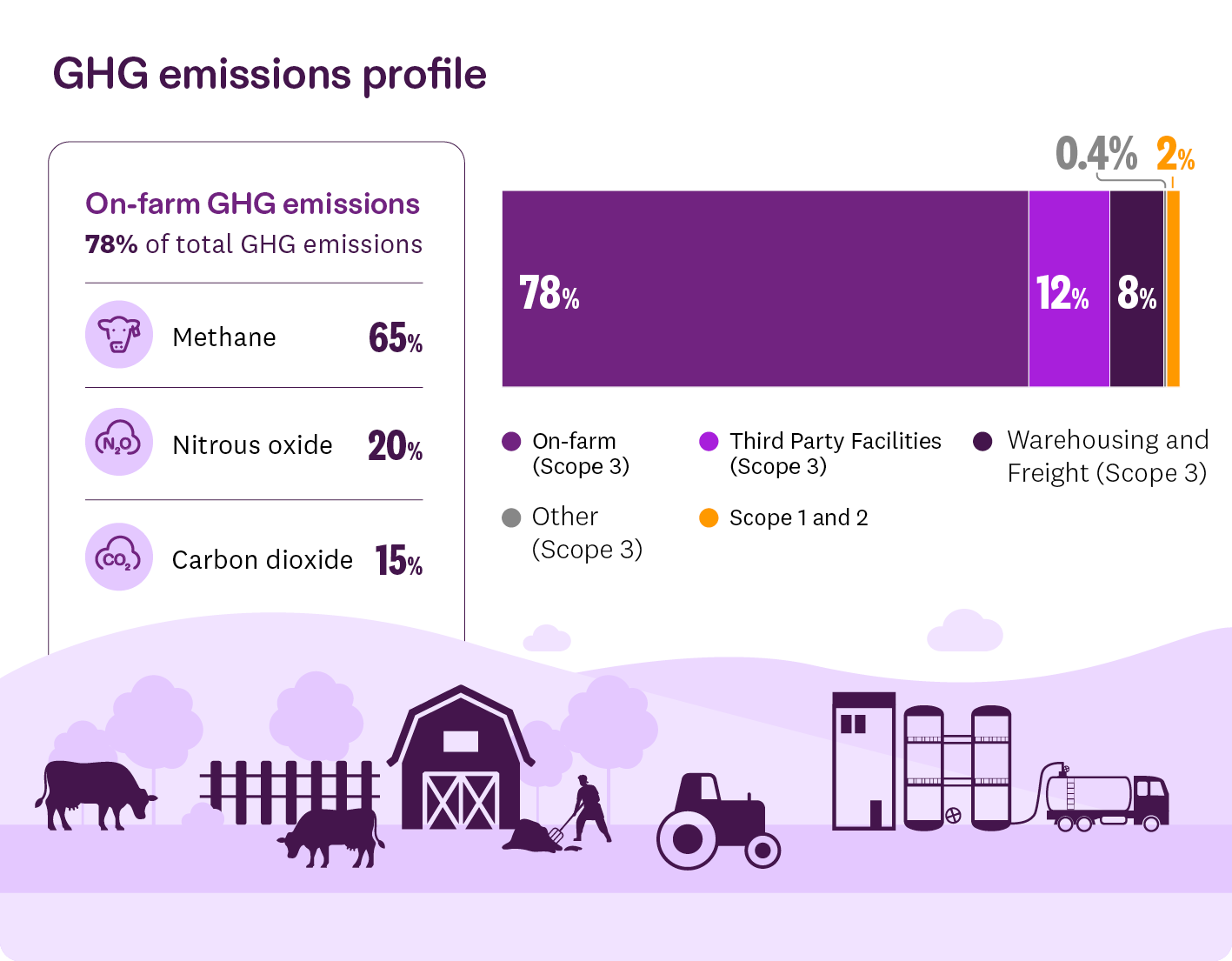
The a2 Milk Company’s emissions profile as at 30 June 2026.
Emissions Targets for a Growing Business
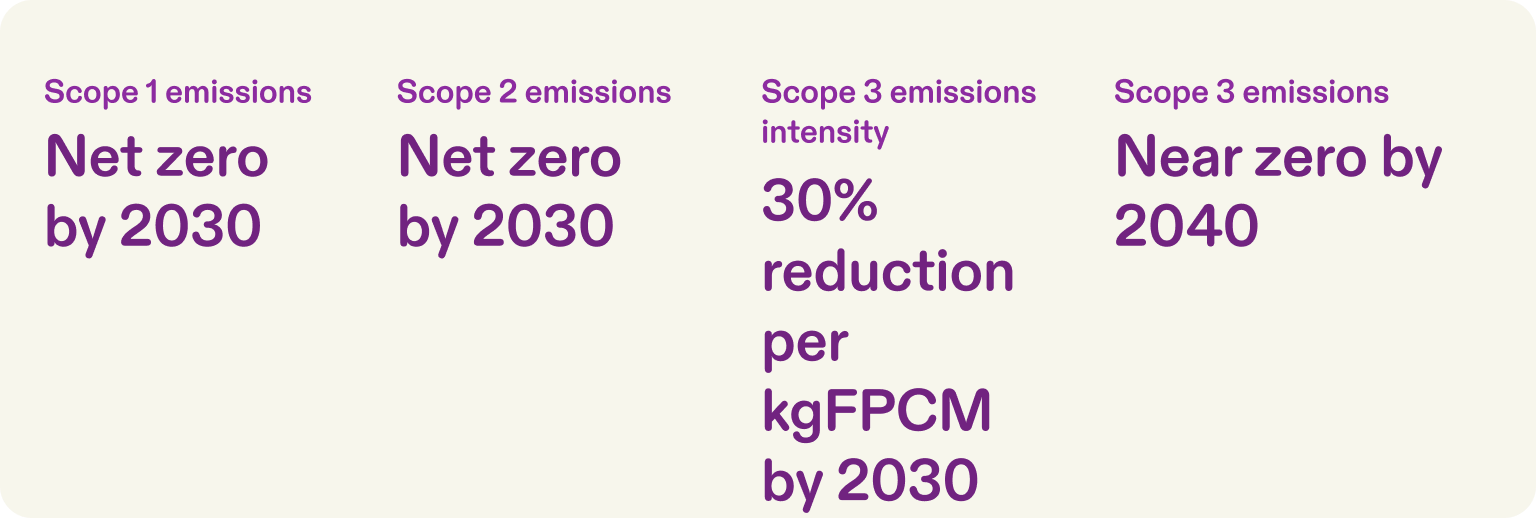
The a2 Milk Company has set emissions reduction targets across the business. These are:
- Net zero GHG emissions for Scope 1 and Scope 2 by 2030
- Near zero GHG emissions for Scope 3 by 2040
Our aim is not simply to reduce emissions, but to do so whilst also growing the business. That’s why emissions intensity is a key indicator of progress. On that measure, we track emissions per kilogram of fat and protein corrected milk produced through an interim intensity target:
- 30% reduction of Scope 3 emissions, per kilogram of fat and protein corrected milk, by 2030 from FY21 baseline year
Emissions Reduction Targets
Our Progress
By investing in practical solutions and directing effort where it matters most, we are delivering meaningful emissions reductions to support our climate targets. This work is guided by our Emissions Reduction Roadmap and Climate Transition Plan, which are detailed in our latest Climate Statement. The summary below highlights where we’ve made the greatest impact so far.
Scope 1 Emissions (Direct Operations)
Target
STATUS
Net zero by 2030
On Track
As at 30 June 2026
Most of our Scope 1 emissions come from the energy used to generate heat in the production of our products at Smeaton Grange in Australia and a2 Pōkeno in New Zealand. Generating this heat currently relies on natural gas and other fuels, making it a significant source of emissions.
To ensure year-on-year performance is measured consistently, we updated our FY21 emissions baseline during FY26 to reflect our current operational structure. Against this updated baseline, our Scope 1 emissions were 10,512 tCO₂e in FY26, representing a 3.7% reduction since FY21.
We remain focused on achieving our target of net zero Scope 1 and 2 emissions by 2030. During FY26, work commenced to convert the gas-fired boiler at a2 Pōkeno to an electrode boiler, supporting the transition away from fossil fuels. We also continued to utilise a mixture of hybrid and fully electric vehicles across our Australian fleet, helping to reduce emissions from direct operations.
Scope 2 Emissions (Purchased Electricity)
Target
STATUS
Net zero by 2030
On Track
As at 30 June 2026
Reducing emissions from purchased electricity remains a key part of our pathway to achieving net zero Scope 1 and 2 emissions by 2030.
At a2 Pōkeno, renewable energy certificates (RECs) are contracted to cover the site's annual electricity consumption, supporting our transition towards net zero Scope 1 and 2 emissions by 2030.
Renewable electricity is also procured for our Smeaton Grange manufacturing facility and offices where available. As we continue to electrify our operations and replace fossil fuel-based energy sources with electricity, Scope 2 emissions may increase in the short term. This transition is an important step in reducing overall emissions from our operations and achieving our 2030 net zero Scope 1 and 2 target.
1Renewable energy certificates (RECs) have been procured from Meridian for the a2 Pōkeno site in New Zealand.
Scope 3 Emissions (Indirect Emissions)
Target
STATUS
Emissions intensity
-30% / kg FPCM (from FY21 base year) by 2030
Progressing
As at 30 June 2026
Emissions reductions
Near zero by 2040
On Track
As at 30 June 2026
The most significant proportion of our emissions come from on-farm enteric methane, which accounted for approximately 78% of our total greenhouse gas emissions in FY26. We are focused on practical, science-led solutions that reduce these emissions while sustaining productive and resilient farming systems. Our approach is both customer and cow focused, ensuring methane reduction strategies support animal health and maintain the quality our customers expect.
We have a target to reduce Scope 3 emissions intensity by 30% per kilogram of fat and protein corrected milk (FPCM) by 2030, against our updated FY21 baseline. FY26 data as at 30 June 2026 shows we have achieved a 15% reduction in Scope 3 emissions intensity, representing more than half of the progress required to achieve our FY30 target.
This improvement reflects ongoing gains in farm efficiency, productivity and energy management across our value chain. During FY26, we established on-farm data approaches and tools across New Zealand, Australia and the United States, continued our participation in AgriZeroNZ to support the development of methane and nitrous oxide reduction technologies, and funded emissions reduction initiatives through the a2™ Farm Sustainability Fund.
Research and development
Through our investment in AgriZeroNZ, we support targeted initiatives to speed up the development and deployment of tools farmers can use to reduce emissions. Further detail is provided in the Tackling On-farm Dairy Emissions Together section below.
Supporting Farms
Through the a2™ Farm Sustainability Fund, two of our key priority areas are supporting farmers who supply A1 protein free milk to reduce GHG emissions and adapt to climate change. We provide annual funding for farmer-led projects that deliver practical solutions, such as wetland restoration, alternative fertiliser trials and solar panel installations. These initiatives not only lower emissions but also build resilience in farming systems for the future.
For more detail, see our FY26 Annual Report and Climate Statement.
Tackling On-Farm Dairy Emissions Together
Reducing greenhouse gas emissions is a challenge shared across the dairy industry. That’s why we work closely with AgriZeroNZ, Dairy Australia, DairyNZ, and the Sustainable Business Council NZ, alongside our key processing partners, to accelerate innovation and make faster progress that protects access to high-quality nutrition and supports a sustainable future for dairy.
One of the most important collaborations driving this work is AgriZeroNZ, a partnership between the New Zealand Government and leading agribusinesses and banks. We’ve invested $3.5 million NZD2 into this initiative, which matches private-sector funding with government investment, dollar-for-dollar, to accelerate impact.
AgriZeroNZ has a clear goal: to speed up the development of practical tools that help farmers reduce enteric methane and nitrous oxide emissions without compromising productivity or profitability.
Solutions under development include probiotics, inhibitors, vaccines, reproductive technologies and pasture.
For information on the progress and research outcomes of the AgriZeroNZ partnership, visit agrizero.nz/progress.
2As at 30 June 2025
Reporting and Methodology
We calculate our greenhouse gas emissions in line with the Greenhouse Gas Protocol, using recognised emissions factors from Australia, New Zealand and other relevant jurisdictions. Our reporting covers Scope 1, 2 and 3 emissions, and is updated annually through boundary assessments to ensure accuracy and consistency.
Scope 2 emissions are reported using both the location-based method (which applies grid-average emission factors) and the market-based method (which reflects renewable energy procurement).
We have developed an Emissions Reduction Roadmap that draws on current and emerging mitigation strategies. This includes working with farmers and processors through initiatives like the a2™ Farm Sustainability Fund. We continue to refine our approach as new data, technologies and reporting standards evolve.
For detailed methodologies, emissions factors, assumptions and full inventory results, please refer to our Climate Statement, which can be accessed via our ESG reporting library.
The ESG reporting library contains all voluntary and mandatory climate and ESG disclosures, performance updates and detailed sustainability data.
Explore Our Sustainability Focus Areas
Sustainable Packaging
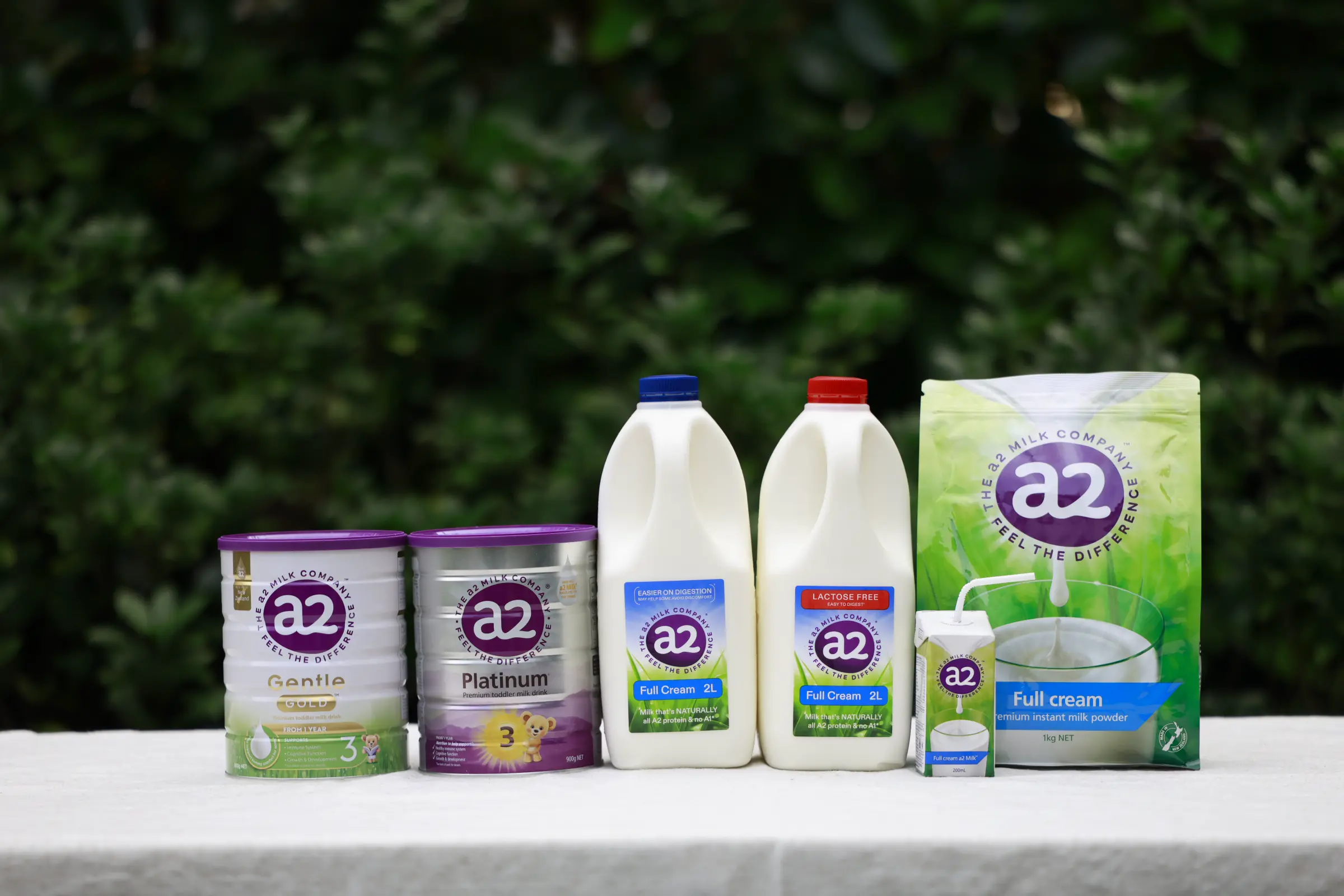
Improving circularity by using recyclable materials, increasing use of recycled content and providing clear, accurate on-pack information to enhance packaging recovery.
Thriving Farms
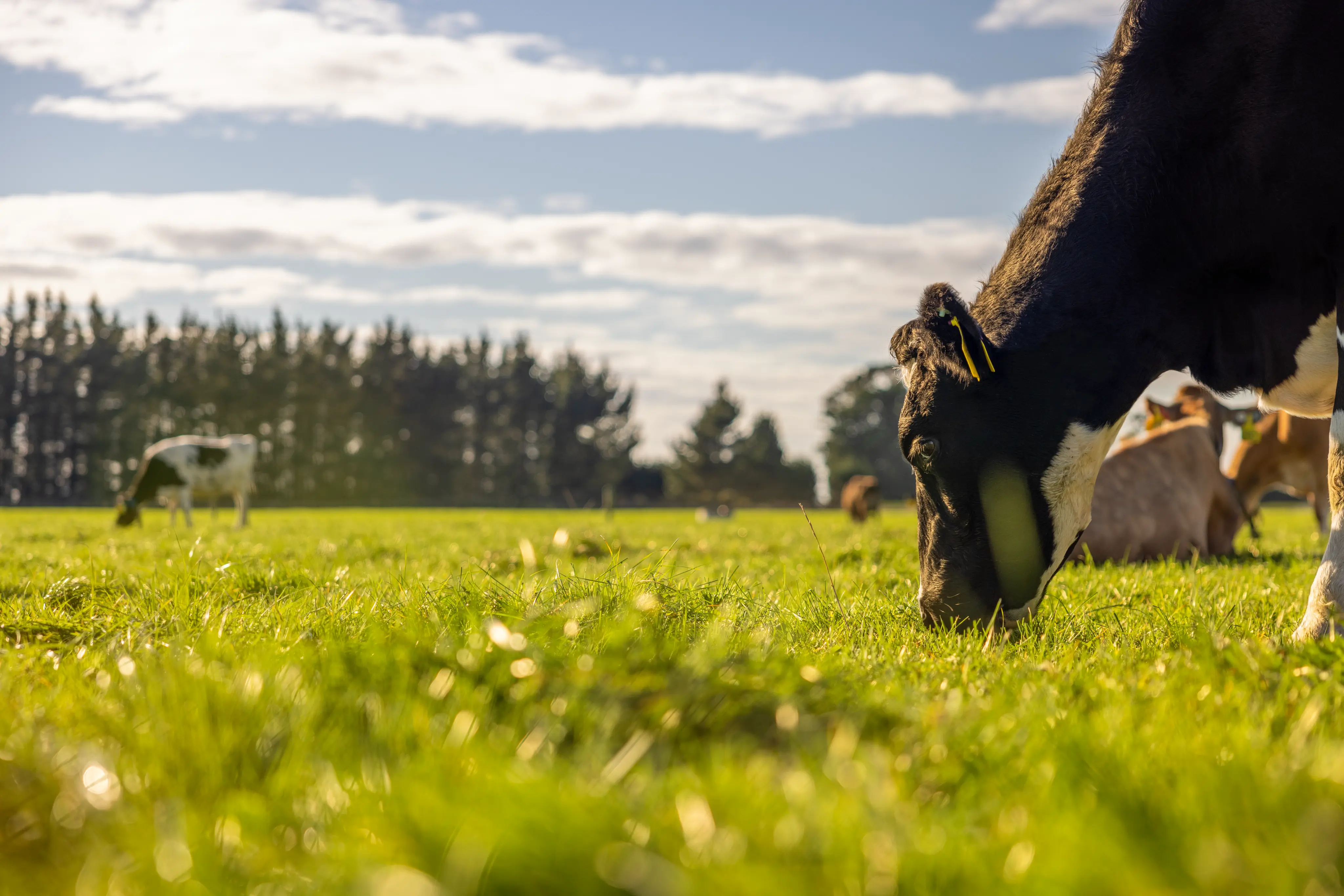
Partnering with farmers to strengthen sustainable practices and cow welfare on-farm, to build a resilient supply chain.
Responsible Supply Chain
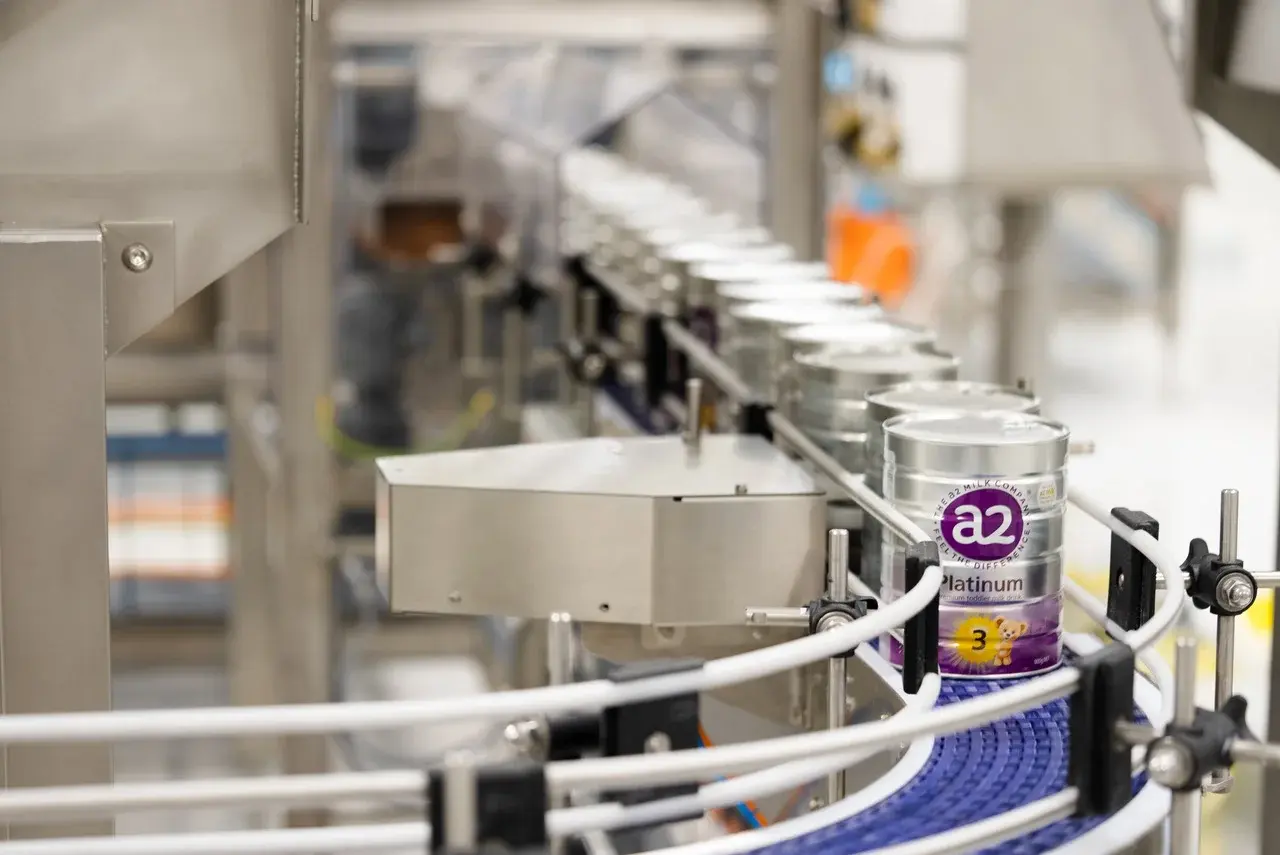
Sourcing ingredients and materials responsibly, with a focus on human rights and ethical practices.

Enriching Communities
Supporting children, families and our farming communities to thrive.
